Service to
Society.
St. Jude's School has taught in Ghana since 1972. Today that is 180 learners from KG 2 through to JHS 3 with 15 teachers, on Ghana's Standards-Based Curriculum. Service to Society is the motto on our crest — and underneath it, class sizes small enough to notice a learner and reporting detailed enough for a parent to see exactly where their child stands.
Our Vision
To be a centre of excellence inspiring disciplined, innovative, and high-achieving learners.
Our Mission
To deliver high-quality, inclusive, and learner-centred education through visionary leadership, expert teaching, and active parent-teacher partnerships.
What shapes our learners
Every learner at St. Jude's develops these essential behaviours that prepare them for lifelong success.
Knowledge
Building a strong foundation of understanding across all subjects and disciplines.
Process Skills
Developing critical thinking, problem-solving, and analytical abilities.
Attitude & Values
Instilling positive character traits, ethical behaviour, and a growth mindset.
Our Core Values
Safe & Reliable School Bus Service
St. Jude's School is exploring convenient and secure transportation for learners, so the journey to school is as safe as the day that follows it.
Making Every Journey Count
St. Jude's School is planning a fleet of buses designed around learner safety and comfort, so parents can have peace of mind on every trip to and from school. Routes and fees will be announced once the service is confirmed.
Service to Society.
Since 1972.
Those four words sit on our crest, and they set the test we hold ourselves to: a learner leaves here able to do something useful for the people around them. Underneath it are class sizes small enough to notice a learner, and reporting detailed enough that a parent can see precisely where their child stands, subject by subject.
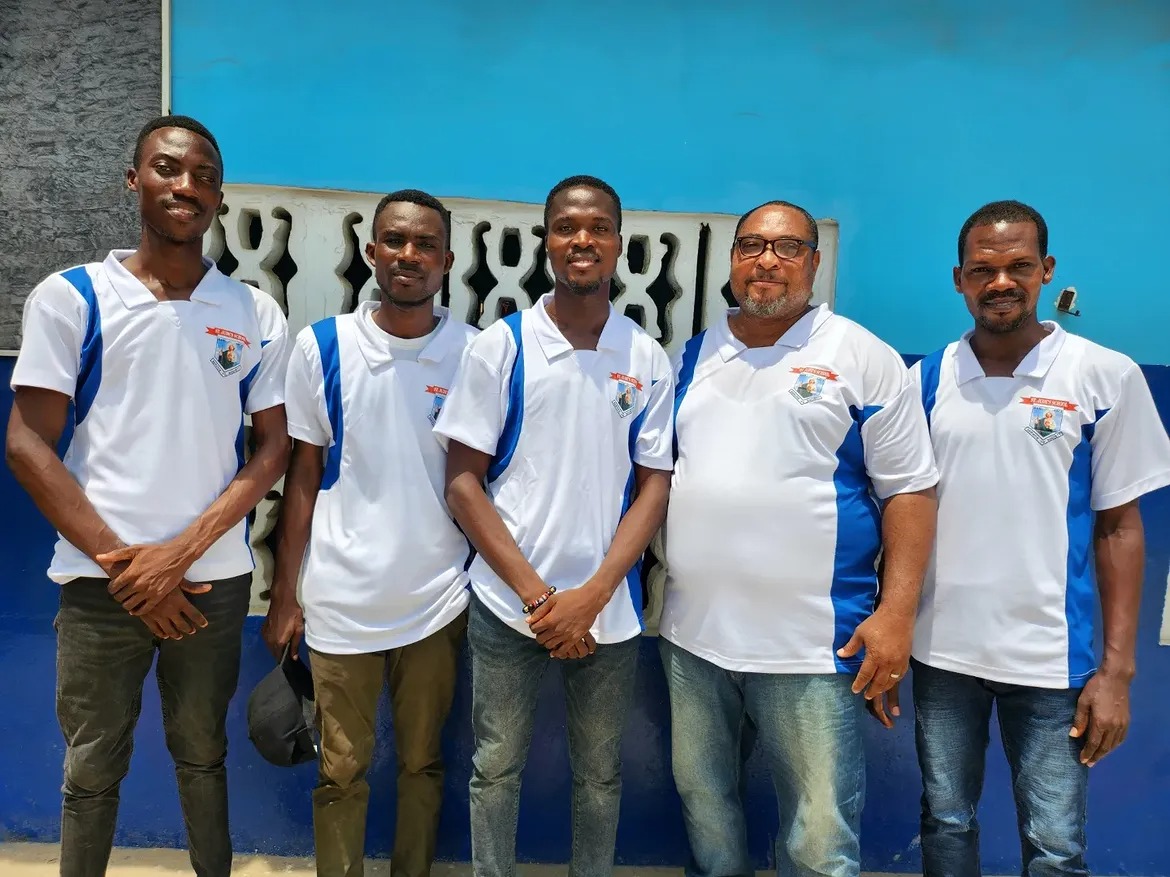
Proficiency levels are set per section, so KG is never judged on a JHS scale.
180 learners and 15 teachers — roughly twelve to a class. Small enough that a teacher notices the day a learner goes quiet, and small enough to do something about it.
Class tests carry 50% of the term mark and the end-of-term exam the other 50%. Alongside them we record mid-term assessments and project work, so one bad morning never decides a term.
We report a position in each subject, not just one overall place in the class. A learner who is third in Mathematics and twentieth in English should be told exactly that.
Every report card carries a class teacher’s remark and a head teacher’s remark. Two people who know the learner have to put their name to how the term went.
“Twelve learners to a teacher. That is the whole idea.”
— St. Jude's School
How a year here runs
Three terms, and assessment that runs the whole way through rather than landing all at once at the end.
The year opens. Class tests start early and keep running — they carry half of every term mark, so no learner waits for the exam to find out where they stand.
Mid-term assessments and project work go on record alongside the class tests, giving a fuller picture than any single paper could.
The end-of-term examination carries the other half of the mark. Reports go out per term, each with a class teacher's remark and a head teacher's remark.
A position in each subject, plus an overall average — so a parent can see which subjects are carrying their child and which need work.
Standards-based learning
that measures what matters.
Our curriculum follows the Standard-based curriculum of Ghana, making every child a global citizen and giving every learner the best we have to offer.
Clear Learning Objectives
Every lesson has measurable goals aligned with national standards.
Continuous Assessment
Regular progress tracking ensures no learner falls behind.
Differentiated Instruction
Teaching adapts to each learner's pace and learning style.
Standardized Benchmarks
Learners meet age-appropriate milestones recognized nationally.
Core Competencies
What a learner actually gets
The things that shape an ordinary week here, rather than the things that sound good on a brochure.
What makes St. Jude's special
We believe education is more than academics. Here's what shapes your learner's experience.
Our Graduation Ceremony
A milestone moment for learners finishing JHS 3 — and for the recognition handed out along the way.

A Day to Remember
Graduation closes JHS 3 — the end of nine years for learners who joined us in KG 2. Families, teachers and the community come together to send them on.
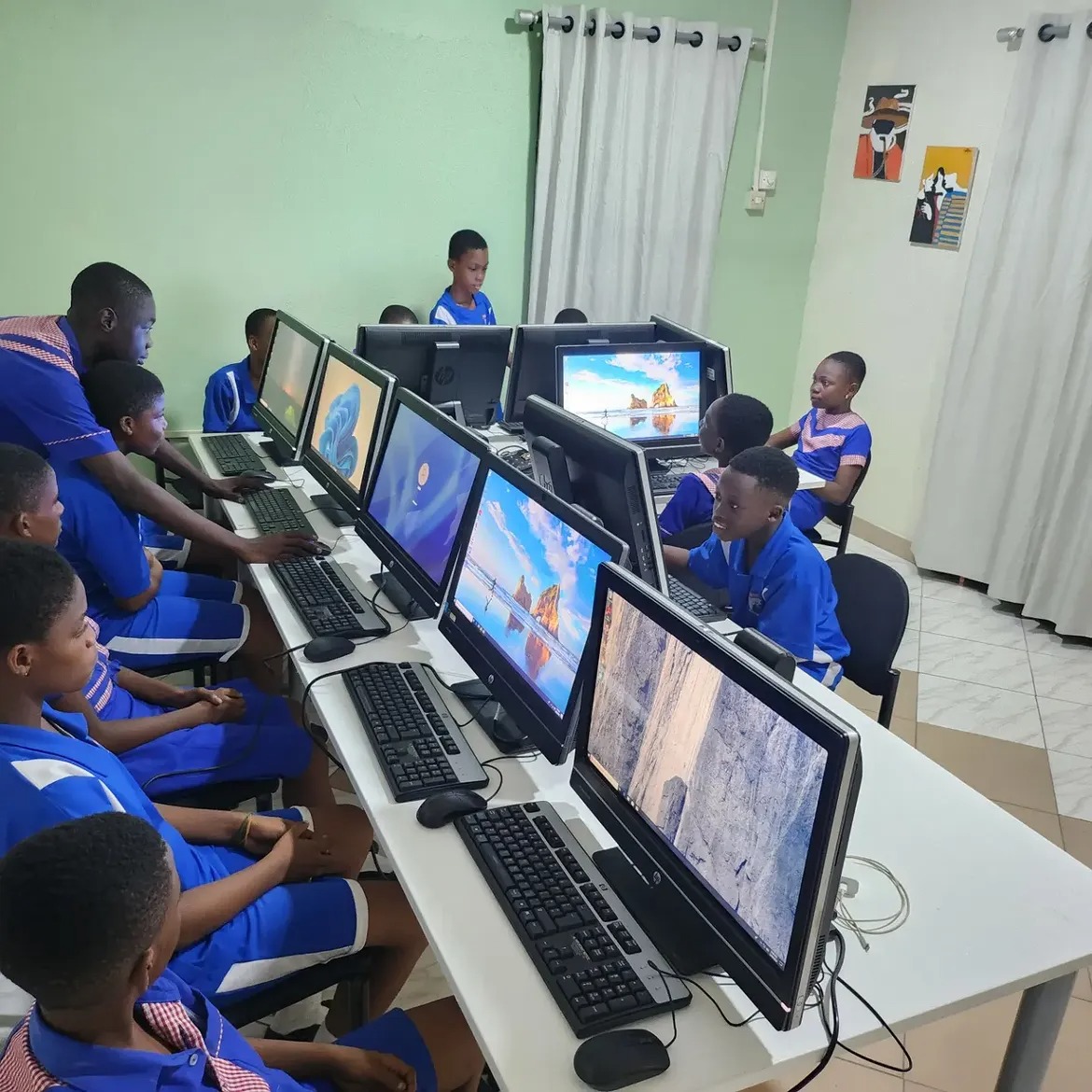
Where The Work Happens
Every learner gets time on a machine of their own. Because we rank each subject separately rather than only overall, the learner who comes alive in ICT is seen for it, whatever their position in the class.
Don't take our word for it.
across Ghana
“The class is small enough that his teacher actually knows him. When he started falling behind in English we heard about it in weeks, not at the end of term. That alone was worth the move.”
“What I appreciate most is the report card. It gives her position in each subject, not one overall place, so we can see she is strong in Science and needs help in Maths. Both her teacher and the head teacher sign off on it.”
“We started her here in KG 2 and never had a reason to move her. Knowing she can go right through to JHS 3 with teachers who already know her took a real weight off us.”